Ethiopia’s Eight-Year Economic Transformation: Reform, Resilience, and Results
Ethiopia Assumes Chairship of the African Union Peace and Security Council
A Life of Service and Legacy: Remembering Ambassador Kongit Sinegiorgis
NEWS IN BRIEF
Ethiopia
President Taye Atske Selassie expressed profound sorrow over the passing of veteran diplomat Ambassador Kongit Sinegiorgis, describing her as “a doyenne of Ethiopia’s modern diplomacy.” (See article)
Prime Minister Abiy Ahmed held talks with the President of the Republic of Burundi and current Chairperson of the African Union, Évariste Ndayishimiye, who arrived in Addis Ababa on Thursday (April 09) for a working visit. The two leaders presided over the signing of MoUs to boost bilateral cooperation across various sectors. President Ndayishimiye was welcomed upon arrival by Deputy Prime Minister Temesgen Tiruneh, along with State Minister of Foreign Affairs Ambassador Berhanu Tsegaye.
Prime Minister Abiy and First Lady Zinash Tayachew inaugurated the 5.7-hectare Addis Sports Park last Saturday (April 04), marking a significant milestone in the city’s corridor development and urban renewal journey. The park features Olympic-standard courts, gyms, running tracks, inclusive community facilities, and statues honoring 15 Ethiopian Olympic gold medalists.
On the same day, Prime Minister Abiy launched a state-of-the-art research complex at the Armauer Hansen Research Institute, featuring 40 laboratories and advanced genomics and bioinformatics platforms to boost local pharmaceutical production and strengthen Ethiopia’s health security.
Prime Minister Abiy on Tuesday (April 7) met with Lieutenant General Tadesse Worede and reviewed his annual performance report. Based on the report, the Prime Minister appointed Lieutenant General Tadesse as Acting Administrator of the Tigray Regional State for a one-year term, effective April 9, 2026.
Prime Minister Abiy Ahmed expressed his condolences on the passing of Ambassador Kongit Sinegiorgis, who served Ethiopia in the field of diplomacy for more than half a century. The Prime Minister paid tribute to her unwavering commitment to the rule of law, institutional integrity, diplomatic protocol, and the advancement of Ethiopia’s national interests.
Ethiopia hosted the 16th Conference of Parties (COP16) of the Africa Risk Capacity in Addis Ababa from 8–9 April 2026. Deputy Prime Minister Temesgen Tiruneh opened the session, stressing resilience to climate-induced disasters and highlighting Ethiopia’s initiatives, including the Disaster Risk Response Fund, Green Legacy, renewable energy, and food sovereignty. Ethiopia was also elected Vice Chair of the COP Bureau.
Speaking at the International Vienna Energy and Climate Forum 2026 in Vienna on Thirsday (April 09), Foreign Minister Gedion Timothewos highlighted Africa’s opportunity to leapfrog to low-carbon industrial growth by harnessing its vast renewable energy resources and adding value to its critical minerals.
On the margins of the Forum, Gedion held separate meetings with Beate Meinl-Reisinger of Austria and Monday Semaya Kumba of South Sudan. Talks with the Austrian side focused on further strengthening ties in trade and investment, tourism, and renewable energy, while discussions with his South Sudanese counterpart covered bilateral and regional issues of mutual interest.
Foreign Minister Gedion met AU Commissioner for Political Affairs, Peace & Security, Ambassador Bankole Adeoye, on Tuesday (April 7). Both sides underscored the importance of close coordination and strengthened cooperation in addressing regional and continental issues of peace and security.
Over the past eight years, Ethiopia has undergone a profound economic transformation, moving from a restrictive state-driven model to a more resilient, diversified, and market-oriented economy. (See article)
The 2nd Ethio–Burundi Joint Ministerial Commission meeting wrapped up on Wednesday (April 08) in Addis Ababa, bringing together senior officials and experts from both countries. Discussions focused on boosting cooperation across key sectors, including defense, trade, transport, agriculture, energy, education, digitization, health, and tourism.
Ethiopia has assumed the rotating Chairship of the African Union Peace and Security Council (AU PSC) for April 2026, following an official ceremony at the African Union headquarters. (See article)
On the same day, Ambassador Hadera reaffirmed Ethiopia’s commitment to peace, justice, and human dignity, and underscored the shared responsibility to reject hatred, genocidal ideology, division, and indifference, as he joined the commemoration of the 32nd anniversary of the Genocide against the Tutsi in Rwanda, paying tribute to more than one million innocent lives lost.
Ambassador Hadera signed the book of condolence for the late former Algerian President Liamine Zeroual last Saturday (April 04), paying tribute to his dedication to peace, stability, and national reconciliation. He highlighted the strong Ethiopia-Algeria ties during President Zeroual’s tenure and his enduring legacy.
The AU Peace and Security Council held its 1337th session on “Hate Crimes and Fighting Genocide Ideology in Africa,” on Wednesday (April 08), marking Ethiopia’s first substantive agenda as monthly Chair.
Under Ethiopia’s chairship, the Council also held its 20th informal consultation on “The Impact of the Middle East Crisis on Africa’s Peace & Security” on Thursday (April 09). The Council discussed economic, humanitarian, and security implications, welcomed the recent ceasefire, and emphasized a unified African response through peaceful means.
The Ministry of Foreign Affairs received a delegation from Burundi’s Senior Command and Staff College of the National Defence Force for a strategic study visit on Thursday (April 09). Fitsum Girma, Deputy Director General for African Affairs, briefed the delegation on Ethiopia’s strategic role in the Horn of Africa, highlighting its contributions to regional peace and security, counterterrorism, maritime security, and cooperation on Nile waters.
Ethiopia’s candidate, Abdi Jibril Ali, has been elected to the Committee on Economic, Social and Cultural Rights following elections held on Wednesday (April 08), in New York. The election took place during a session of the United Nations Economic and Social Council (ECOSOC), where member states voted to fill regional seats on the treaty body.
Djibouti
IGAD on Wednesday (April 08) announced the arrival of its Election Observation Mission in Djibouti ahead of the April 10, 2026 presidential election, invited by the Government and Djibouti’s National Independent Electoral Commission (CENI).
South Sudan
Presidential Advisor on National Security Tut Gatluak Manime and Foreign Minister Monday Semaya K. Kumba concluded an official visit to the Kingdom of Saudi Arabia, aimed at strengthening bilateral relations and enhancing cooperation between the two countries.
Africa and the African union
AU Commission Chair Mahmoud Ali Youssouf expressed profound sorrow over the passing of Ambassador Konjit Sinegiorgis, a pioneering Ethiopian diplomat and Pan-Africanist. He highlighted her decades-long service, trailblazing role for African women in diplomacy, and enduring legacy in advancing the continent’s interests. Condolences were extended to her family, the Ethiopian government and people, and all Africans mourning her loss.
The African Union marked the 32nd anniversary of the 1994 Genocide against the Tutsi in Rwanda on Tuesday (April 07) in Addis Ababa, under the theme: “Remember – Unite – Renew”.
Ethiopia’s Eight-Year Economic Transformation: Reform, Resilience, and Results
Over the past eight years, Ethiopia has undergone a profound economic transformation, moving from a restrictive state-driven model to a more resilient, diversified, and market-oriented economy.
The Office of the Prime Minister, in a statement, noted that prior to 2028, the country’s growth was constrained by structural weaknesses, including weak job creation, a narrow export base, and heavy reliance on external debt. The Agriculture Development-Led Industrialization (ADLI) framework, while boosting agricultural output, fell short of fully harnessing Ethiopia’s agricultural potential and generating sufficient rural incomes to drive industrialization. Manufacturing exports remained below three billion dollars for many years, and industrial parks often functioned in isolation, with weak integration into the domestic economy. This model also generated macroeconomic vulnerabilities, as large infrastructure investments financed through external borrowing failed to generate sufficient foreign exchange, increasing debt pressures. Key sectors such as telecommunications, finance, and mining remained underdeveloped or closed to private participation, limiting innovation, private investment, and economic dynamism.
Since 2018, Ethiopia has pursued a comprehensive reform agenda aimed at addressing these structural constraints, unlocking new growth opportunities, and correcting macroeconomic imbalances.
A cornerstone of these reforms has been the modernization and diversification of agriculture. Ethiopia has achieved wheat self-sufficiency, emerging as Africa’s largest wheat producer by 2024/25. Crop diversification has expanded rapidly, including growth in rice, oilseeds, and other industrial crops, while high-value agriculture and livestock production have surged. Annual egg output reached 9.4 billion units, milk production approximately 13 billion liters, and meat output increased nearly tenfold. These gains reflect improvements in nutrition, food systems, and diversified rural incomes. Structural initiatives such as cluster farming, now encompassing 9.5 million farmers across 12.8 million hectares have yielded measurable gains, with productivity rising 29 percent and incomes up 18 percent. Overall agricultural production grew from 41.7 million tons to roughly 150 million tons over seven years, bolstering both rural and urban employment and improving export performance. Coffee production doubled to nearly one million tons, generating around 2.65 billion dollars in export revenue in 2024/25.
Through the Green Legacy Initiative, Ethiopia has planted over 48 billion seedlings and rehabilitated 12.5 million hectares of land, raising forest coverage from 17 percent in 2019 to 23 percent in 2025. These efforts have mitigated soil erosion, enhanced agricultural productivity, and supported export growth, particularly in coffee, underscoring the strong connection between environmental stewardship and economic development.
Ethiopia’s industrial strategy has shifted toward integrated Special Economic Zones that combine manufacturing, logistics, and services while strengthening domestic linkages. Investor numbers have risen from 36 in 2018 to more than 200 today, with domestic investors representing nearly 65 percent. This approach marks a move from enclave-style industrialization to a more inclusive, sustainable, and interconnected industrial ecosystem. Export-oriented production in these zones continues to expand, broadening the country’s export base.
The mining sector has emerged as a key economic pillar. Once underutilized, it now drives sustainable development and broad-based benefits. Gold production increased to nearly 39 tons, generating approximately 3.5 billion dollars in exports in 2024/25, accounting for over 45 percent of total exports. Import substitution efforts have also succeeded: domestic coal production has fully replaced imports, and cement production capacity now exceeds 20 million tons annually, supporting self-sufficiency.
Telecommunications liberalization has propelled one of Africa’s fastest digital expansions. Mobile subscriptions grew from 37.9 million to 87.9 million, significantly expanding access and inclusion. Mobile financial services now serve over 58 million users, with transactions exceeding 7.5 trillion birr. Financial sector reforms have strengthened macroeconomic stability and improved financial intermediation. Credit allocation has shifted toward the private sector, which now accounts for more than 85 percent of total bank lending. Reforms, including the restructuring of state-owned banks and improved financial sector governance, have enhanced liquidity, asset quality, and sustainability.
A defining feature of recent progress has been strong fiscal discipline. Unlike the pre-2018 period, reforms have reduced reliance on external commercial borrowing. Improvements in state-owned enterprises, better project selection, and restructuring of underperforming sectors have reduced inefficiencies and strengthened public finances.
Recognizing cities as engines of growth and structural transformation, Ethiopia has invested in urban development, infrastructure, and housing, leveraging private sector participation. This transformative initiative has improved living conditions and expanded economic opportunities. Integrated corridor development has enhanced the livability, competitiveness, and economic functionality of over 50 cities, positioning them as hubs for innovation, tourism, and business.
Ethiopia is transitioning from a heavily state-led investment model toward one driven by productivity, private sector dynamism, sectoral linkages, and structural transformation. Reforms across agriculture, industry, mining, finance, digitalization, and urban development reflect a practical, results-oriented approach. While challenges remain, the trajectory is laying the foundation for sustainable and inclusive growth.
Under Prime Minister Abiy Ahmed, guided by the philosophy of Medemer (synergy), Ethiopia has advanced toward greater self-reliance, resilience, and measurable outcomes. Despite challenges, progress over the past eight years demonstrates strong potential, with growth becoming broader, more diversified, and inclusive, and momentum building to deliver lasting benefits for future generations. As highlighted by the Office of the Prime Minister, these achievements reflect a sustained commitment to reform, structural transformation, and pragmatic economic management, providing a solid foundation for Ethiopia’s future development.
Ethiopia Assumes Chairship of the African Union Peace and Security Council
Ethiopia has assumed the rotating Chairship of the African Union Peace and Security Council (AU PSC) for April 2026, following an official ceremony at the African Union headquarters. This marks Ethiopia’s first time holding the monthly chairship since rejoining the Council in April 2025. During its tenure, Ethiopia will guide discussions on both country-specific and thematic issues high on the Council’s agenda.
The Chairship officially commenced on Tuesday (April 07) with a flag-hoisting ceremony for ten newly elected Council members. The event was graced by State Minister for Foreign Affairs, Ambassador Hadera Abera, and the Chairperson of the African Union Commission, Mahmoud Ali Youssouf. Both leaders congratulated the new members and encouraged them to discharge their mandates with dedication and responsibility.
During its first week, Ethiopia led deliberations on three major agenda items. On Wednesday (April 08), the Council convened an Open Session on Hate Crimes and the Fight Against Genocide Ideology in Africa. This annual session, first mandated in 2017, is held in the context of commemorating the 1994 Genocide against the Tutsi in Rwanda.
The Council also held an informal session on the crisis in the Middle East and its impact on Africa. Discussions focused on the economic and security spillover effects on the continent and assessed Africa’s preparedness to respond to global crises that carry far-reaching repercussions.
Later that day, the Council deliberated on the situation in the Central African Republic. The session was convened in light of encouraging developments following the December 2025 elections, the country’s first democratic polls in more than three decades. Ethiopia’s Permanent Representative to the AU and the United Nations Economic Commission for Africa, and Chair of the AU PSC, Ambassador Hirut Zemene, commended the progress achieved and underscored the need to sustain the momentum generated by the elections. The Council welcomed the outcome of the polls, urged partners to increase humanitarian support, called for the extension of the United Nations Multidimensional Integrated Stabilization Mission in the Central African Republic (MINUSCA), and endorsed the appointment of Alice Nzomukunda as the new AU Special Representative.
Looking ahead, Ethiopia will steer discussions on several key issues, including a PSC field visit to South Sudan aimed at assessing preparations for the country’s first-ever national elections. The programme also includes a joint PSC-African Peer Review Mechanism (APRM) retreat and deliberations on Africa’s Peace Support Operations in the context of UN peacekeeping reforms.
A key highlight of Ethiopia’s Chairship will be a ministerial-level session on Artificial Intelligence Governance, Peace, and Security in Africa. The dialogue will explore the growing influence of emerging technologies on Africa’s security landscape and underscore the role of artificial intelligence in shaping global governance and economic systems. Ethiopia aims to place the issue of AI development, governance, and deployment high on the agenda of the Union, recognizing its transformative potential for the future.
Before concluding its Chairship, Ethiopia will also host a briefing from the African members of the United Nations Security Council (A3) on their efforts to advance the AU’s Common Position within the Council.
Ethiopia has been a member of the African Union Peace and Security Council since its establishment in 2004 and served on the Council for ten years before rejoining in April 2025. Its assumption of the Chairship in April 2026 underscores Ethiopia’s renewed leadership within the AU and provides an opportunity to help guide deliberations on pressing peace and security challenges across the continent.
A Life of Service and Legacy: Remembering Ambassador Kongit Sinegiorgis

The passing of Ambassador Kongit Sinegiorgis marks the end of an extraordinary chapter in the history of Ethiopian diplomacy and the broader story of Africa’s diplomatic and institutional development. For more than five decades, she served Ethiopia with unwavering dedication, professionalism, and a firm commitment to the ideals of Pan-Africanism and international cooperation.
Ambassador Kongit belonged to a generation of diplomats whose service coincided with some of the most consequential transformations in Africa’s modern political and diplomatic history. Her career unfolded alongside the emergence of newly independent African states and the creation of continental institutions that sought to advance unity, cooperation, and collective progress. Through her work, she contributed both to the strengthening of Ethiopia’s foreign service and to the evolution of Africa’s diplomatic engagement with the wider international community.
Her passing has prompted reflection and tribute from Ethiopia’s national leadership and from across the African diplomatic community.
In a message of condolence, President Taye Atske Selassie expressed deep sorrow at her passing, describing Ambassador Kongit as the “doyenne of Ethiopia’s modern diplomacy.” He recalled her contributions during the formative years of Africa’s continental diplomacy and her lifelong engagement with the institutions that emerged from that historic moment. The President also highlighted the wisdom and counsel she shared generously with colleagues and younger diplomats throughout her long career.
“Kongit was the companion we leaned on for wisdom,” the President noted, adding that she would be remembered for her impeccable service and held in the highest reverence.
Prime Minister Abiy Ahmed also paid tribute to Ambassador Kongit’s distinguished career, recalling her more than five decades of service to Ethiopia. He emphasized her steadfast commitment to the rule of law, institutional integrity, diplomatic protocol, and the protection of Ethiopia’s national interests. The Prime Minister further acknowledged her significant role in advancing the participation and leadership of women within Ethiopia’s diplomatic service.
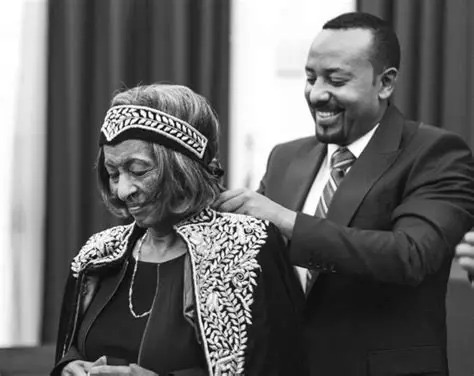
At the Ministry of Foreign Affairs, her passing has been deeply felt among colleagues who worked alongside her and among those who benefited from her mentorship. State Minister Ambassador Hadera Abera described her death as a profound loss to Ethiopia’s diplomatic community, noting her decades of service to both Ethiopia and the African continent. State Minister Ambassador Berhanu Tsegaye likewise extended condolences to her family and colleagues, remembering her as a distinguished diplomat who represented Ethiopia with integrity, professionalism, and dedication.
Tributes have also come from continental institutions where Ambassador Kongit’s contributions were widely recognized.
Chairperson of the African Union Commission Mahmoud Ali Youssouf described her as a distinguished diplomat and steadfast advocate for Africa’s collective interests. He noted that her career, spanning several decades, contributed to advancing Africa’s priorities on the global stage while inspiring new generations of African diplomats, particularly women entering the profession.
“Ambassador Kongit Sinegiorgis embodied the highest ideals of African diplomacy, marked by integrity, excellence, and an enduring commitment to our shared future,” he stated.
Deputy Chairperson of the African Union Commission Ambassador Selma Malika Haddadi similarly highlighted Ambassador Kongit’s decades of dedicated service to Ethiopia and to continental institutions, noting her steadiness, clarity of purpose, and her role in expanding opportunities for women in diplomacy.
Beyond official tributes, Ambassador Kongit’s life and career carry a broader historical significance. Few diplomats could claim to have personally witnessed and contributed to so many formative moments in Africa’s institutional history.
As recalled by Joseph Atta-Mensah, former Principal Policy Adviser at the United Nations Economic Commission for Africa, conversations with Ambassador Kongit often felt like stepping into living history. He encountered her during high-level meetings and African Union summits, where she had a rare ability to connect contemporary policy discussions with the historical experiences that shaped them.
Ambassador Kongit had been present in Addis Ababa in May 1963 when African leaders gathered in Africa Hall to establish the OAU under the leadership of Emperor Haile Selassie. She often spoke vividly about the atmosphere of that historic gathering and about the powerful appeals for unity voiced by leaders such as Ghana’s President Kwame Nkrumah.
“A conversation with her was never just a conversation,” Atta-Mensah observed. “It was an encounter with history.”
Her contributions to Ethiopia’s foreign service and to African unity were marked by steadfast commitment and integrity. “Ambassador Kongit was a great Pan-Africanist,” Atta-Mensah emphasized. “She belonged to a generation that did not merely inherit history but shaped it — a generation that believed deeply in Africa’s unity and possibility, not as rhetoric, but as responsibility.”
As Atta-Mensah noted, “Ethiopia, and by extension Africa, has lost not just a diplomat, but a custodian of memory — a witness to its most defining institutional moments, and a voice that connected its past to its present with rare clarity and conviction.”
Even in this loss, her legacy endures in the institutions she helped shape, in the generations of diplomats she inspired, and in the continuing story of African unity to which she devoted her life.
Ambassador Kongit joined Ethiopia’s Ministry of Foreign Affairs in the 1950s, embarking on a diplomatic career that would span more than half a century. Over the course of those decades, she held numerous responsibilities and represented Ethiopia across a wide range of bilateral and multilateral assignments.
Widely recognized as Ethiopia’s second female ambassador after Ambassador Yodit Imru, she served as Ambassador Extraordinary and Plenipotentiary in Ethiopia’s diplomatic missions in Ottawa, Cairo, Tel Aviv, and Vienna. Through these postings, she played an important role in strengthening Ethiopia’s diplomatic engagement with partner countries across several regions.
Her service also extended to multilateral diplomacy. She represented Ethiopia in key international institutions, including as Permanent Representative to the African Union and the United Nations Economic Commission for Africa. In these roles, she contributed to advancing Ethiopia’s diplomatic priorities while supporting broader efforts toward continental cooperation.
Even in the later stages of her career, her experience continued to be valued in regional peace initiatives. From June 2017 to September 2018, she served as Special Advisor in the IGAD-led South Sudan peace process, contributing her extensive diplomatic expertise to efforts aimed at advancing stability and reconciliation in the region.
Across her many assignments, Ambassador Kongit consistently embodied the professionalism, discipline, and sense of responsibility that define Ethiopia’s diplomatic tradition. Her career also served as an inspiration to generations of diplomats who followed, particularly women pursuing careers in international relations.
The passing of Ambassador Kongit Sinegiorgis represents more than the loss of a distinguished public servant. It marks the departure of a generation that helped shape Africa’s diplomatic institutions and carried forward the ideals of Pan-African cooperation during a formative period in the continent’s history.
For Ethiopia’s diplomatic community, she remains a model of dedication, professionalism, and integrity. For Africa, she will be remembered as one of the quiet architects of the continent’s institutional and diplomatic development.
In mourning her passing, Ethiopia and Africa also honor a life of service and legacy devoted to diplomacy, cooperation, and the enduring pursuit of continental unity.

Leave Your Comments Here