39thAU Summit Concludes with Ethiopia’s Fruitful Participation
The Second Italy–Africa Summit Held in Addis Ababa
President Recep Tayyip Erdoğan Pays an Official Visit to Ethiopia
NEWS IN BRIEF
Ethiopia
President Taye Atske Selassie participated in the 9th Africa Business Forum (ABF) on Monday (February 16) in Addis Ababa, where he underscored that Africa’s transformation is not an abstract idea or distant ambition; it must be visible in factories that hire, farms that add value, digital platforms that reach markets, and creative industries that turn youth talent into human capital.
The 39th Ordinary Session of the Assembly of Heads of State and Government and the 48th Ordinary Session of the Executive Council of the African Union were successfully held from February 11–15 in Addis Ababa, under the theme “Assuring Sustainable Water Availability and Safe Sanitation Systems to Achieve the Goals of Agenda 2063.” (See article)
On the sidelines of the 39th African Union Summit, Prime Minister Abiy held discussions with heads of state and government from several African countries and multilateral institutions, including the United Nations, to advance cooperation on bilateral continental, and global priorities. He also met and congratulated President Évariste Ndayishimiye of Burundi on assuming the Chairpersonship of the African Union.
President Recep Tayyip Erdoğan of the Republic of Türkiye paid an official visit to the Federal Democratic Republic of Ethiopia on Tuesday (February 17). He was received upon arrival at Bole International Airport by Prime Minister Abiy. (See article)
Prime Minister Abiy on Wednesday (February 18) reviewed major development initiatives across Qellem Wollega Zone, East Wollega Zone, and West Wollega Zone in the Oromia Region, underscoring the strong growth and progress underway.
Prime Minister Abiy on Saturday (February 14) extended his warmest congratulations to Prime Minister Mia Mottley on her election victory.
President of Ghana John Dramani Mahama and Foreign Minister Gedion Timothewos commissioned Ghana’s new chancery in Addis Ababa on Monday (February 16), highlighting the strong historic ties between the two countries.
Foreign Minister Gedion held talks on Saturday (February 14) with Eswatini’s Foreign Minister Pholile Dlamini-Shakantu on the margins of the 39th African Union Summit to discuss strengthening bilateral relations. On the same day, he met with Mauritania’s Foreign Minister Mohamed Salem Ould Merzoug to review bilateral and continental issues, after which the two sides signed an MoU to promote cooperation in diplomatic training.
The Ministry of Foreign Affairs, in the presence of Minister Gedion and the Head of the National Organizing Committee and State Minister for Foreign Affairs, Ambassador Berhanu Tsegaye, held a recognition ceremony honoring institutions and individuals who contributed to the successful organization of the 39th African Union Summit and the second Italy–Africa Summit on Thursday (February 19).
Ethiopia and Ireland signed a Memorandum of Understanding on Wednesday (February 18) to establish a framework for regular political consultations and strengthen bilateral cooperation, with State Minister of Foreign Affairs Ambassador Hadera Abera and Ireland’s Minister of State for International Development and Diaspora Neale Richmond signing the agreement.
Ambassador Hadera participated in the 8th round of political consultations between Ethiopia and Canada on Tuesday (February 17), alongside Cheryl Urban, Assistant Deputy Minister at Global Affairs Canada, who led the Canadian delegation.
Ethiopia and the UN Sustainable Development Solutions Network signed a Memorandum of Understanding on Saturday (February 14) to enhance cooperation in advancing sustainable development, with Ambassador Hadera signing on behalf of Ethiopia and Jeffrey D. Sachs, President of SDSN, signing on behalf of the network.
Ambassador Berhanu made a statement to the press on Tuesday (February 17) on the successful conclusion of the 39th African Union Summit and the second Italy–Africa Summit.
The Sixth Ethiopia–EU Joint Working Group Meeting on Migration was held Wednesday (February 18) in Addis Ababa, co‑chaired by Director General for Europe and American Affairs, Ambassador Meles Alem, and Head of Irregular Migration and Home Affairs at the European Commission, Silvena Pesta, where both sides reaffirmed their shared commitment to sustaining cooperation in addressing migration challenges.
Kenya
Prime Minister Abiy held talks on Sunday (February 15) with President William Ruto on continental priorities and shared interests.
Somalia
Prime Minister Abiy met President Hassan Sheikh Mohamud on bilateral issues on the sidelines of the African Union Summit on Saturday (February 14).
South Sudan
PM Abiy met President Salva Kiir Mayardit on Sunday (February 15) to discuss matters of mutual interest, including bilateral and regional issues.
Africa and the African Union
The Second Italy–Africa Summit was held in Addis Ababa on Friday (February 13), for the first time on African soil, coinciding with high-level meetings of the African Union. The summit took place in the presence of the co-hosts, Prime Minister Abiy Ahmed of Ethiopia and Prime Minister Giorgia Meloni of Italy, along with the AU Commission Chairperson. (See article)
39th AU Summit Concludes with Ethiopia’s Fruitful Participation
The 39th Ordinary Session of the Assembly of Heads of State and Government and the 48th Ordinary Session of the Executive Council of the African Union were successfully held from February 11–15 in Addis Ababa, under the theme “Assuring Sustainable Water Availability and Safe Sanitation Systems to Achieve the Goals of Agenda 2063.”
Address by PM Abiy at the AU Summit
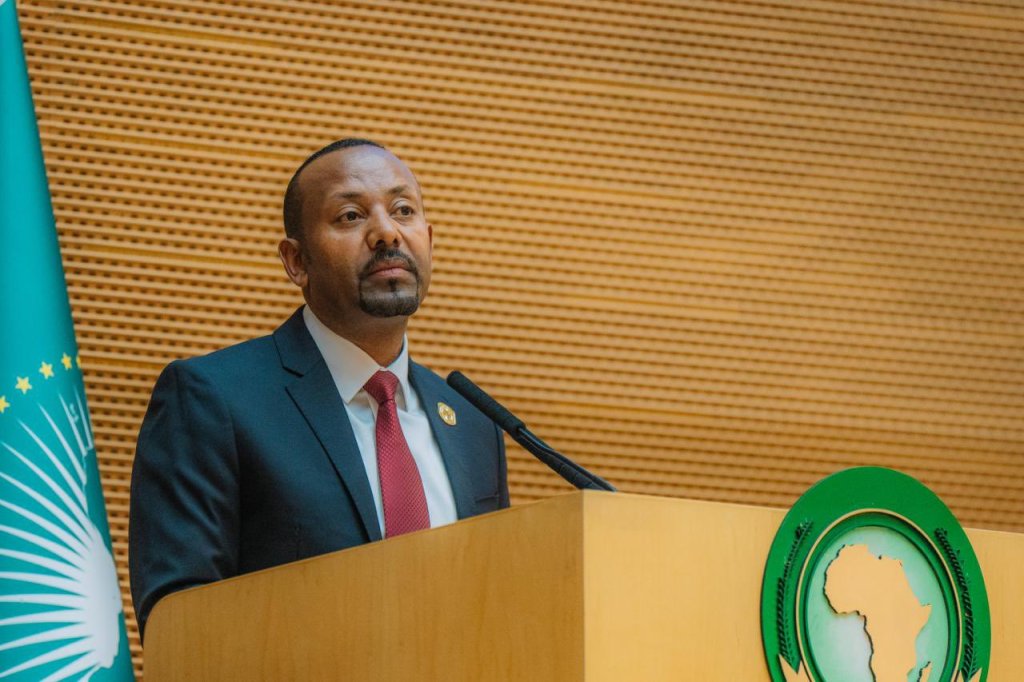
In his remarks at the opening ceremony, Prime Minister Abiy Ahmed noted that today, as Africa gathers at a defining moment, the continent’s most strategic asset is not only what is extracted but also what is designed, built, and governed. He emphasized that progress is achieved when vision is translated into systems and ideas into lasting institutions.
Reflecting on the African Water Vision, Prime Minister Abiy highlighted that water is more than a resource; it is a foundation for development, innovation, and stability, shaping cities, farms, health, and peace. He underlined Ethiopia’s experience, explaining that responsible water management has been central to guiding development wisely. He cited the Grand Ethiopian Renaissance Dam as an example, noting how it now powers homes and industry, exports electricity to neighboring countries, and demonstrates how African ingenuity can drive shared prosperity. He added that rivers can become engines of stability when governed for shared benefit and that targeted policy and innovation, combined with self-sufficiency, have enabled large-scale industrial investments, moving Ethiopia from dependency to production.
Prime Minister Abiy drew attention to Africa’s economic growth, stating that many African economies are among the fastest growing in the world, with projections showing growth on par with, if not above, that of Asia. He shared that Ethiopia expects a growth rate of 10.2% by the end of the year and expressed the country’s aim to move from a low-income economy to a globally competitive one over the next 25 years, anchored in productivity, industrialization, innovation, and quality jobs.
However, he stressed that growth alone is not enough, noting that Africa’s greatest wealth is its people. By 2035, the continent will add more young people to the global workforce than the rest of the world combined, a demographic reality that must be harnessed with purpose. He highlighted Ethiopia’s investments in maternal and child health, early childhood education, and school feeding programs, emphasizing that every child must arrive at school nourished, ready to learn, and prepared to contribute.
Prime Minister Abiy asserted that development must include all of Ethiopia, noting that both urban and rural areas are being transformed to be green, human-centered, and resilient. He pointed to Addis Ababa’s riverside renewal, which has transformed degraded waterways into clean, vibrant public spaces, reducing flood risk, restoring dignity, and strengthening community life. He said Africa’s urban landscape is expanding rapidly and must be intentional, envisioning the African city of the future as walkable, green, youth-centered, and grounded in dignity and belonging.
In rural areas, modernization is enhancing livelihoods and connecting communities to markets, reflecting an integrated approach that links development with climate stewardship. He highlighted the Green Legacy Initiative, through which Ethiopia has planted more than 48 billion trees, restoring ecosystems and building a living legacy for future generations.
Acknowledging the environmental costs of global development, Prime Minister Abiy stressed that climate action must be anchored in justice and equity, aligning finance, technology, and partnerships to enable Africa to thrive. He noted Ethiopia’s hosting of the Second Africa Climate Summit and preparations for COP 32, ensuring Africa speaks with one voice and presents solutions globally.
He described technological transformation as equally important, explaining that under Digital Ethiopia 2030, the country is building digital public infrastructure that places citizens at the center of service delivery. By linking the national digital ID (FAYDA) with payment systems and mass data exchange, Ethiopia enables secure access to services, seamless transactions, responsible data sharing, and economic growth.
Prime Minister Abiy highlighted Ethiopia’s leadership in artificial intelligence, noting the establishment of Africa’s first AI institute in 2020, and plans to launch an AI university anchored in the Ethiopian philosophy of synergy through purposeful collaboration. This institution, he explained, will unite human values with machine intelligence, local context with global relevance, and scientific rigor with applied impact, ensuring technology drives growth and positions Africa as a global contributor in the age of intelligence.
Connectivity remains a priority, he continued, citing Ethiopian Airlines as a means to connect people, link markets, and move goods. To sustain this momentum, Ethiopia is building Africa’s largest airport, a next-generation gateway to anchor the continent in the global value chain. Beyond aviation, Ethio-telecom is expanding across Africa, bridging the digital divide and linking the continent’s future through strategic partnerships. He stressed that connectivity must be complete and that for a nation like Ethiopia, with over 130 million people, sustainable growth requires diversified access, including reliable access to the sea through peaceful cooperation, fundamental to economic growth and long-term stability in the Horn of Africa.
Prime Minister Abiy reflected on the global context, noting that Africa meets at a moment of profound transition. In an era of uncertainty, he said Africa’s strength will lie in a confident and united union. As the AU approaches its silver jubilee, this marks a transition from foundational unity to functional sovereignty. He explained that sovereignty means owning African narratives through initiatives like Pulse of Africa, amplifying African voices, and shaping agendas rather than merely responding to crises.
He concluded by emphasizing that every river managed, city designed, and digital platform deployed must generate resilient opportunity and dignity. By 2063, Africa will be defined by what it secures, sustains, and shares. Prime Minister Abiy reminded the audience that this is Africa’s moment and responsibility. He extended his appreciation to outgoing AU Chairperson President João Lourenço and congratulated the new incoming Chairperson, wishing him success in guiding Africa forward
Address by FM Gedion at the AU Executive Council
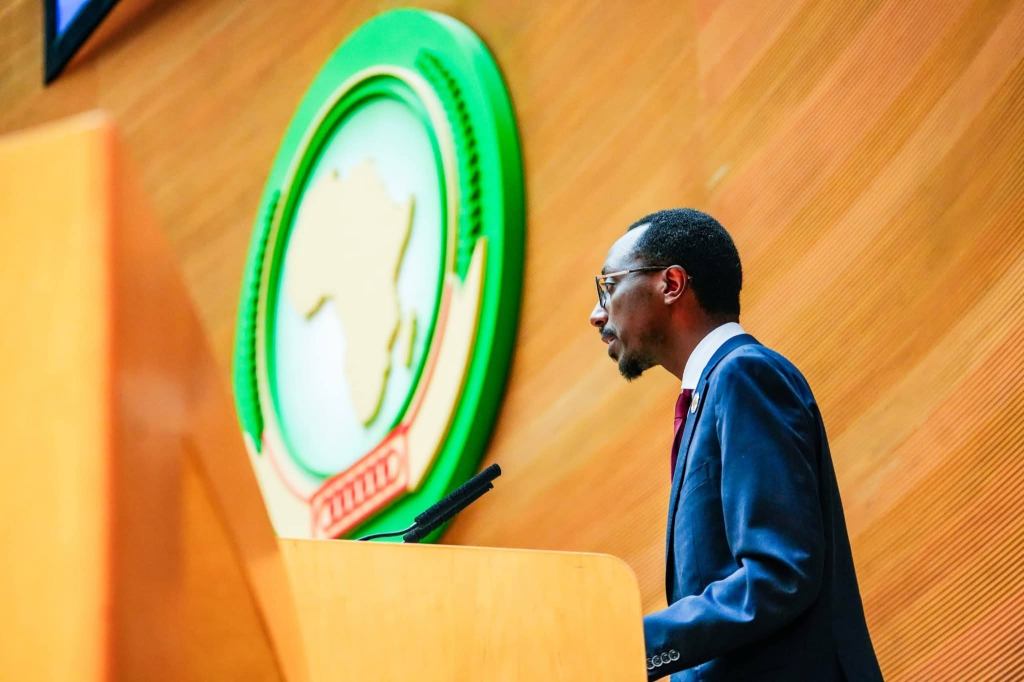
Ahead of the summit Foreign Minister Gedion Timothewos addressed the 48th Ordinary Session of the African Union Executive Council by reflecting on the significance of the Union, which was established to achieve political independence and economic integration. He emphasized that unity remains essential for the continent’s collective security, independence, and prosperity.
Recalling developments over the past year, Minister Gedion noted that Africa has demonstrated a capacity to stand together on key issues, including UNSC reform, climate justice, and the reform of the global financial architecture. He highlighted the display of a common position during the first G-20 held on African soil in Pretoria, South Africa. He also observed that several elections were successfully conducted across the continent, and the Republics of Guinea and Gabon rejoined the Union following the restoration of constitutional order. The AU Commission’s role in providing electoral support and observation missions, he said, reflects positive progress that should be consolidated and built upon.
At the same time, the Minister acknowledged that the continent continues to face challenges, including unconstitutional changes of government, which undermine the Union’s normative foundations. He warned that the evolving geopolitical landscape, where multilateralism and global cooperation are being eroded, is affecting Africa’s peace and security. Fierce competition for technological supremacy, control of critical mineral resources, and major logistics routes are increasingly shaping international relations, with trade and economic cooperation often subordinated to political and security considerations.
In this context, Minister Gedion observed, many major and middle powers view Africa as a site of competition and an instrument to advance their ambitions. He criticized the persistence of a mentality of domination, extraction, and exploitation among some external actors. Stressing that African unity must be real and the AU must be strong, he asserted that true partnership does not depend on charity or goodwill but requires genuine strength, which emanates from unity. He expressed hope that the current session of the Executive Council would contribute to bolstering unity and revitalizing commitment to shared objectives.
Turning to social and economic developments, Minister Gedion highlighted that in 2025, Africa strengthened regional integration through Agenda 2063 and the African Continental Free Trade Area, transforming the aspiration for a continental free trade area into a tangible reality. He noted progress in primary health care, agricultural productivity, and climate change mitigation, while acknowledging that much work remains to achieve the Africa envisioned.
The Minister emphasized the need for Africa to uphold ownership of African solutions; defend peace, constitutional order, and sovereignty; and advance fair global partnerships and financial reform, including debt relief and climate financing grounded in equity and respect. He stressed the importance of fair representation on international platforms, including permanent African representation on the United Nations Security Council and strengthened participation in international economic forums, climate negotiations, and global health governance. He asserted that no global platform can be credible without Africa’s rightful role in shaping international decisions.
Finally, Minister Gedion highlighted Ethiopia’s preparations to host COP 32, viewing it as an opportunity for Africa to lead the global conversation on climate justice and sustainable development. He tied this to the year’s AU theme of sustainable water availability and safe sanitation, stressing the need to rejuvenate the ecology from which Africa’s water resources originate. He reflected on Africa’s majestic rivers, including the Nile, Congo, Niger, and Zambezi, and its great lakes, including Victoria, Tanganyika, and Malawi, and called for an approach guided by the principle of UBUNTU, taking into account the needs, situations, and aspirations of all concerned.
The Summit also marked the orderly transition of the AU Chairpersonship, reflecting the union’s tradition of rotational leadership and regional balance. João Manuel Gonçalves Lourenço, President of the Republic of Angola and outgoing Chairperson of the African Union, officially handed over the Chairpersonship to Évariste Ndayishimiye, President of the Republic of Burundi and incoming Chairperson of the Union.
The newly constituted Bureau that comprises Burundi, Ghana, Angola, and Tanzania, was also endorsed to guide the Union’s work in the year ahead. The Northern region will undertake a regional consultation with the view of nominating its representative to fill the remaining seat on the Bureau.
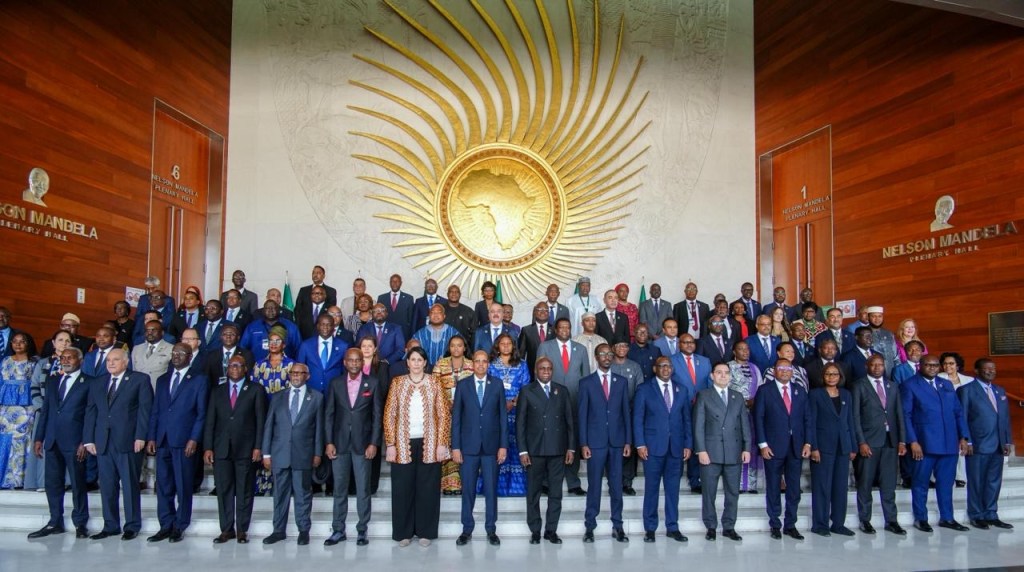
Key Achievements
Recognition of Ethiopia’s Climate Leadership and COP32 Preparations
One of the most notable achievements for Ethiopia was the formal recognition by the Assembly and the Committee of African Heads of State and Government on Climate Change (CAHOSCC) regarding Ethiopia’s leading role in climate diplomacy and, in particular, in preparations towards COP32, which Ethiopia is set to host in 2027.
Heads of State and Government commended Prime Minister Abiy for initiating the Africa Climate Innovation Compact (ACIC) and the Africa Climate Facility (ACF), aimed at mobilizing USD 50 billion to implement 1,000 African-designed climate solutions by 2030. The Assembly also extended its full support to these initiatives.
The Summit also welcomed the appointment of Gedion Timothewos, Minister of Foreign Affairs of the Federal Democratic Republic of Ethiopia, as President of COP32. The African Union Commission was directed to mobilize Member States and partners to support Ethiopia in its preparations and hosting of the Conference. The Assembly further expressed appreciation for the successful hosting of the Second Africa Climate Summit, acknowledging its contribution in strengthening Africa’s collective voice on global climate action and diplomacy
Ethiopia proposed AU Theme of the Year 2027 jointly with Algeria
Ethiopia, jointly with Algeria, proposed the AU Theme of the Year 2027 titled “AU at the Dawn of its 25th Anniversary: Leveraging the Full Potential of the Single African Air Transport Market (SAATM) & New Technologies for Continental Integration.”
The proposed theme positions 2027 as a milestone year for accelerating continental integration as the Union approaches its 25th anniversary. It emphasizes the full operationalization of the Single African Air Transport Market (SAATM), a flagship project of Agenda 2063, and the strategic use of emerging technologies to enhance connectivity and competitiveness.
With 38 Member States having signed the Solemn Commitment and over 100 new intra-African air routes already operational, the renewed political momentum aims to unlock the economic potential of a liberalized African airspace. Improved connectivity is recognized as critical for advancing AfCFTA, boosting trade and tourism, and strengthening Africa’s global competitiveness.
As home to Africa’s leading aviation hub and a key connector across the continent, Ethiopia welcomed the renewed political momentum to accelerate implementation and unlock the economic potential of SAATM.
Nomination as AU Champion on AI and Digital Health
The Assembly endorsed the proposed nomination of Prime Minister Abiy as African Union Champion on Artificial Intelligence and Digital Health, reflecting Ethiopia’s growing leadership in digital transformation and innovation across the continent.
On Institutional Reform
The Assembly, having heard the report of the Champion on AU Institutional Reform, William Ruto, President of the Republic of Kenya, reviewed the progress achieved to date and the way forward regarding institutional reform. Accordingly, it emphasized the importance of increased alignment and efficiency, financial sustainability, and improved implementation of decisions.
While emphasizing the importance of exploring innovative ways of financing to ensure financial autonomy, Ethiopia reiterated that Africa already holds a solid normative and institutional framework. The reform, therefore, should prioritize strengthening operational effectiveness, implementing decisions adopted by the various AU organs, and sustained political ownership by Member States.
On Elections to AU Organs
Elections of 10 Members of the Peace and Security Council (PSC), 3 Commissioners of the African Commission on Human and Peoples’ Rights (ACHPR), and 7 Members of the African Committee of Experts on the Rights and Welfare of the Child (ACERWC) were conducted in accordance with the established procedures of the Union. Accordingly, ten members of the PSC, namely the Democratic Republic of the Congo and Gabon from Central Africa region; Somalia and Uganda from the Eastern Africa region; Morocco from the Northern Africa region ; Benin , Côte d’Ivoire, and Sierra Leone from the Western Africa region; and South Africa and Lesotho from the Southern Africa region, were elected for the 2026–2028 term.
Ethiopia’s candidate Albab Tesfaye was also elected to be a member of the African Committee of Experts on the Rights and Welfare of the Child (ACERWC), reflecting strong support from Member States and recognition of Ethiopia’s commitment to advancing children’s rights across the continent.
Engagement with APRM
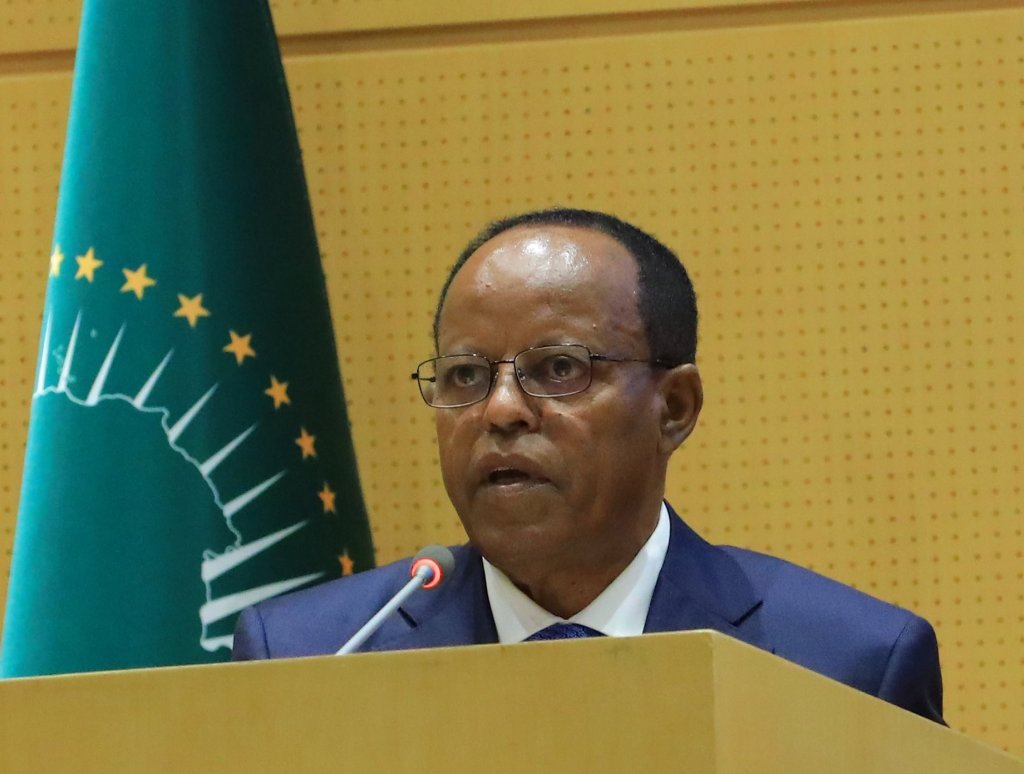
Taye Atske Selassie, President of the FDRE, addressed the 35th Ordinary session of APRM Forum, during which Ethiopia reaffirmed its commitment to the African-made and -owned governance mechanisms by expressing its readiness to undergo a targeted review under the African Peer Review Mechanism (APRM) on Climate-Smart Agricultural Development. This review, the first of its kind, will provide an opportunity to highlight progress made toward agricultural resilience and food self-sufficiency.
The Africa CDC Committee of Heads of State and Government Meeting (CHSG)
FM Gedion took part in the 5th Meeting of the Africa CDC CHSG. During the meeting, Minister Gedion reiterated Ethiopia’s strong support for the work of the Africa CDC and appreciated the continued cooperation, including the support of the center in responding to the recent public health challenges faced by African Union member states. He also highlighted the importance of ensuring predictable and sustainable financial support to enable the Centre to effectively discharge its continental mandate.
The meeting reviewed and adopted key documents, including the Report of the Africa CDC Governing Board held on 27 January 2026, the Africa CDC 2025 Annual Activity Report, and the Centre’s 2026 Work Plan, as well as draft decisions to be submitted to the upcoming 39th Ordinary Session African Union Summit.
Overall, the successful conclusion of the 39th AU Summit underscores Ethiopia’s active and constructive engagement within the African Union system. Through strategic leadership and sustained diplomacy, Ethiopia contributed to advancing continental integration, consolidating Africa’s collective voice on climate and global affairs, and strengthening the African Peace and Security Architecture and Africa Governance Architecture.
The Second Italy–Africa Summit Held in Addis Ababa
The Second Italy–Africa Summit was held in Addis Ababa on Friday (February 13), for the first time on African soil, coinciding with high-level meetings of the African Union. The summit took place in the presence of the co-hosts, Prime Minister Abiy Ahmed of Ethiopia and Prime Minister Giorgia Meloni of Italy, along with the AU Commission Chairperson.
Prime Minister Abiy called for a transformative Africa–Italy partnership anchored in shared prosperity, dignity, and mutual benefit as he officially opened the summit. Addressing the opening session, he described the summit as a pivotal moment in Africa–Italy relations, emphasizing the need to move beyond dialogue toward concrete outcomes. The Prime Minister welcomed Italy’s forward-looking Mattei Plan, noting that it aligns closely with Ethiopia’s national development priorities and reform agenda. “The Mattei Plan complements our homegrown economic reforms across renewable energy, climate resilience, smart agriculture, infrastructure, digital transformation, and human capital development,” he noted.
Highlighting Ethiopia’s rapid transformation, Prime Minister Abiy pointed to major hydropower projects, expanding regional energy interconnections, railway and aviation infrastructure, and the establishment of innovation hubs as pillars of sustainable development. He underscored Addis Ababa’s role as Africa’s diplomatic capital and a growing hub for aviation, logistics, and global conferences, positioning Ethiopia as a bridge connecting Africa to global markets and ideas.
Stressing Africa’s demographic strength, the Prime Minister described the continent’s young population as its greatest asset. He highlighted the transformative role of digital innovation and artificial intelligence in modernizing energy systems, food production, healthcare, trade, and public services.
Prime Minister Abiy also framed the partnership as a model for balanced and forward-looking cooperation, addressing migration, climate action, economic growth, and technological advancement in an integrated manner. He reaffirmed Ethiopia’s commitment to deepening strategic cooperation with Italy and across Africa, urging leaders to move forward with determination.
Prime Minister Giorgia Meloni, in her remarks, highlighted the historic significance of hosting the summit in Africa and reaffirmed Italy’s commitment to deepening partnerships with African nations based on mutual trust, respect, and equality. She reflected on the progress since the first summit in Rome two years ago, emphasizing the implementation of the Mattei Plan as a structured framework for sustainable development and cooperation, now recognized as an international strategy rather than a solely Italian initiative.
Meloni outlined concrete achievements under the Mattei Plan, including investments in energy, infrastructure, digital and physical connectivity, agriculture, food security, health systems, and education, emphasizing the involvement of both public and private actors to generate tangible benefits for African communities. She stressed the importance of human capital development, particularly through education, and underlined Africa’s right to process its resources locally, create jobs, and pursue development independently.
The African Union Commission reaffirmed its commitment to closely collaborating with Italy and other partners to make the Italy–Africa partnership a model of balanced and forward-looking cooperation. AU Commission Chairperson Mahmoud Ali Youssouf emphasized that the partnership should be anchored in Africa’s long-term development blueprint, Agenda 2063, and aligned with continental frameworks to ensure transparency, predictability, and mutual benefit.
United Nations Secretary-General António Guterres welcomed the summit as a strong signal of partnership amid growing geopolitical and economic fragmentation. Speaking to the high-level gathering, he emphasized that cooperation founded on trust and mutual respect is essential to addressing shared global challenges. Guterres described the summit as “a light in a world of growing divides” and highlighted the importance of aligning efforts with the 2030 Agenda for Sustainable Development and the African Union’s Agenda 2063.
The summit and the Italy–Africa partnership represent not only a framework for economic growth and social progress but also a model for equitable, forward-looking cooperation that can serve as an example for other intercontinental partnerships.
President Recep Tayyip Erdoğan Pays an Official Visit to Ethiopia
President Recep Tayyip Erdoğan of the Republic of Türkiye paid an official visit to the Federal Democratic Republic of Ethiopia on Tuesday (February 17). He was received upon arrival at Bole International Airport by Prime Minister Abiy Ahmed.
The two leaders held discussions on bilateral cooperation and regional security issues, followed by a joint press conference. Prime Minister Abiy stated that they agreed to increase the volume of bilateral trade to at least 1 billion USD. He highlighted that Ethiopia–Türkiye relations, rooted in longstanding mutual respect and cooperation, will continue to deepen across bilateral and multilateral platforms. On Ethiopia’s pursuit of access to the sea, he requested President Erdoğan’s support in applying diplomatic efforts to assist Ethiopia’s peaceful quest for reliable access.
President Erdoğan reaffirmed Türkiye’s commitment to supporting Ethiopia’s development initiatives and emphasized Türkiye’s readiness to expand investments across key sectors.
As Türkiye prepares to host COP31 and Ethiopia to host COP32 in 2027, the two leaders agreed to exchange experiences and collaborate closely to ensure the successful organization and smooth conduct of the conferences.
During the visit, both leaders underlined their countries’ shared commitment to deepening political, economic, and cultural ties and to strengthening mutual partnership in regional and global affairs of common interest.
The two leaders also witnessed the signing of the 9th Ethio–Türkiye Joint Economic Commission Agreed Minutes and a Memorandum of Understanding on cooperation in the field of energy.

Leave Your Comments Here