SPECIAL EDITION – Ethiopian Delegation at the 80th UN General Assembly
NEWS IN BRIEF
Ethiopia
Ethiopia’s delegation to the 80th Session of the United Nations General Assembly was led by President Taye Atske-Selassie, accompanied by Health Minister Mekdes Daba and State Minister for Foreign Affairs Ambassador Hadera Abera. On Thursday (September 25), President Taye delivered Ethiopia’s policy statement, while the delegation took part in several mandated meetings and side events. This year’s High-Level Week coincided with the UN’s 80th anniversary, and this special edition of A Week in the Horn is dedicated to covering the high-level week of the Assembly. (See article)
Prime Minister Abiy Ahmed laid the foundation stone on Thursday (October 2) for two major projects: a urea fertilizer plant to be developed by Ethiopian Investment Holdings in partnership with the Dangote Group, and the Gode Oil Refinery to be constructed by Golden Concord Group Limited (GCL). The Premier also inaugurated the first phase of the Ogaden Liquified Natural Gas Project, with an annual production capacity of 111 million liters.
Prime Minister Abiy and First Lady Zinash Tayachew, together with Deputy Prime Ministers Temesgen Tiruneh and Adam Farah, visited Jigjiga City accompanied by a high-level delegation on Wednesday (October 1). During their visit, they reviewed various development projects currently underway in the region.
Prime Minister Abiy attended the World Atomic Week conference in Moscow on Thursday (September 25).
Foreign Minister Gedion Timothewos met in Addis Ababa on Thursday (October 2) with Norwegian Foreign Minister Espen Barth Eide and Danish State Secretary Lotte Machon, discussing clean energy, afforestation, regional security, and investment, underscoring Ethiopia’s outreach to Nordic partners in support of its green development goals.
Somalia
President Hassan Sheikh Mohamud attended a White House dinner hosted by the U.S. President Donald Trump and First Lady Melania on Saturday (September 27).
Africa and the African Union
The African Union Commission and the United States reaffirmed their commitment to cooperation on sustainable development, peace and security, and inclusive economic growth in Africa at a joint press briefing on Wednesday (October 1). AU Commission Chairperson Mahmoud Ali Youssouf and U.S. Senior Advisor for Africa Massad Boulos highlighted partnership and mutual responsibility in advancing initiatives to foster stability and prosperity across the continent.
SPECIAL EDITION – Ethiopian Delegation at the 80th UN General Assembly
Ethiopia’s delegation to the 80th Session of the United Nations General Assembly was led by President Taye Atske-Selassie, accompanied by Health Minister Mekdes Daba and State Minister for Foreign Affairs Ambassador Hadera Abera. On Thursday (September 25), President Taye delivered Ethiopia’s policy statement, while the delegation took part in several mandated meetings and side events. This year’s High-Level Week coincided with the UN’s 80th anniversary, and this special edition of A Week in the Horn is dedicated to covering the high-level week of the Assembly.
The United Nations over the Past Eight Decades
The United Nations, established in San Francisco in 1945, was entrusted with a renewed mandate to coordinate global cooperation in support of state independence, peace, development, and human rights. The Charter of the United Nations, adopted by 51 founding members, now has 193 state parties, the majority of which are newly independent nations from Africa, Asia, and Latin America.
The UN is composed of intergovernmental bodies mandated to make decisions on global issues. These include the principal organs of the General Assembly, the Security Council, and the Economic and Social Council, as well as a range of subsidiary bodies created by their decisions over the years.
Ethiopia and the United Nations share a unique history. Ethiopia’s experience of foreign invasion and the inability of the League of Nations to uphold its mandate on aggression and occupation shaped its perspective as one of the 51 founding members of the UN. Ethiopia entered the organization with strong expectations for a world order guided by international law, collective security, and respect among nations, large and small.
At the General Debate of the UNGA in September and in subsequent sessions, Ethiopia consistently articulated these objectives. Over the decades, Ethiopian leaders, from emperors and presidents to prime ministers and foreign ministers, have addressed the Assembly to reaffirm these commitments.
Ethiopia has also been active in using the UN platform to advance decolonization. At the General Assembly, the Security Council, and the Trusteeship Council, Ethiopia, often in partnership with Liberia and other like-minded states, advocated independence for African territories. Ethiopia and Liberia jointly presented the case of Namibia (then South West Africa) to the International Court of Justice, challenging apartheid rule. Ethiopia also supported diplomatic efforts that contributed to the eventual independence of Angola and Mozambique. In the words of Ambassador Haddis Alemayehou, Ethiopia’s Permanent Representative to the UN during the 14th session of the General Assembly, “the complete emancipation and political, economic, and social advancement of the continent of Africa is of special and direct interest to Ethiopia.” Ethiopia’s advocacy also recognized and celebrated the determination and sacrifices of Africa’s newly independent states.
Ethiopia further played a role in expanding UN membership. It called for the discontinuation of the “enemy states” designation that applied to former Axis powers, supported the reintegration of Germany, Japan, and Italy, and advocated the recognition of the People’s Republic of China’s representation at the UN.
Disarmament was another priority. Ethiopia called for binding instruments prohibiting nuclear and other weapons of mass destruction and submitted a set of principles on nuclear disarmament to the UNGA’s Disarmament Committee at its 30th session. Ethiopia has consistently emphasized the elimination of nuclear weapons, both to reduce fear and mistrust and to free resources for human development.
Sustainable development has also been a longstanding theme in Ethiopia’s UN engagement. In 1954, Foreign Minister Yilma Deressa urged bold action in support of economic growth as a vital dimension of collective security. Ethiopia later supported global development agendas, including the adoption of the Millennium Development Goals in 2000.
Today, the UN faces complex challenges. Concerns over the effectiveness of multilateralism have grown amid geopolitical rivalries and shifting priorities. At the 80th session of the UNGA, leaders acknowledged these difficulties while also calling for renewed cooperation to address pressing global issues.
Ultimately, the UN remains a reflection of the collective will of its member states to work for peace and progress. As Emperor Haile Selassie I remarked in his 1963 address, “What the United Nations has achieved falls regrettably short of our goal of an international community of nations, as the value of the words of the covenant depends wholly on the will of member states to observe and honor them and give them content and meaning.”
President Taye Delivers Ethiopia’s National statement
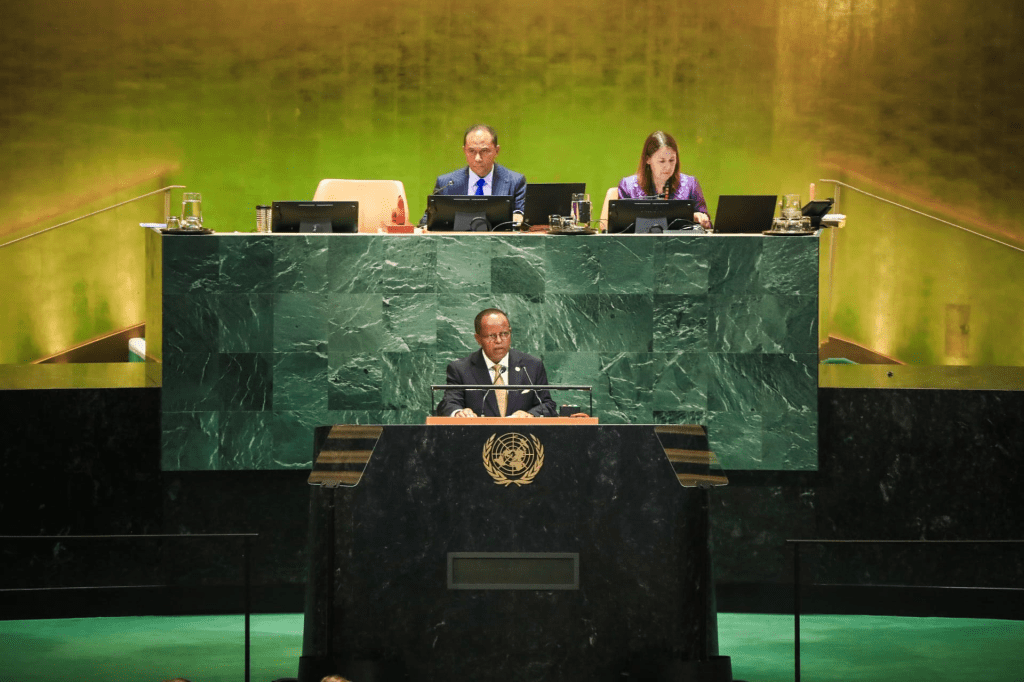
President Taye addressed the High-Level General Debate of the 80th UN General Assembly, emphasizing Africa’s readiness for leadership and a greater role in international affairs. This year, along with Ethiopia, all African heads of state and government spoke with conviction on Africa’s rise despite the structural and systemic challenges it continues to face. (See the Full Statement by the President https://mfaethiopia.blog/2025/09/25/statement-by-taye-atske-selassie-amde-at-the-high-level-political-debate-of-the-80th-session-of-the-united-nations-general-assembly/)
Reflecting on the UN’s achievements over eight decades, President Taye noted progress in decolonization, public health and pandemic control, conflict prevention, humanitarian response, and reducing extreme poverty. The President, however, warned that inequities in representation of the global south in security, economic and financial architecture pose serious risk. He called on Member States, particularly developed countries, to intensify efforts toward collective development and peace.
Recalling Ethiopia’s position since the early days of the United Nations on the need to preserve the mandates of the UN General Assembly, he underscored Ethiopia’s support for the reform of the United Nations in a manner that preserves the mandate of the Assembly, deploys resources to the Global South where the organization has most of its programs.
On matters of international security, the President reaffirmed Ethiopia’s support for diplomacy and peaceful resolution of conflicts. He also stressed the importance of strengthening Africa’s role in global governance, calling for Security Council reform and increased representation of African nations.
Highlighting Africa’s progress, President Taye praised the continent’s economic growth, climate action, and social development, while noting the continued challenges posed by debt and coercive trade measures. He urged the international community to advance debt cancellation initiatives and lift restrictions that hinder Africa’s development.
On regional security, the President underscored Ethiopia’s commitment to combating terrorism in the Horn of Africa and called on the international community to strengthen support for the African Union Support and Stabilization Mission in Somalia (AUSSOM). He emphasized that “now is not the time to retreat from global action in combating terrorism.”
President Taye also celebrated recent national milestones, including the entry into force of the Nile River Basin Cooperative Framework and the commissioning of the Grand Ethiopian Renaissance Dam (GERD). He said the dam, with over 5,000 megawatts of capacity, represents Ethiopia’s commitment to clean energy, providing light for 60 million people without electricity and transforming livelihoods, particularly for women and girls. The project, he added, symbolizes regional cooperation and shared prosperity among Nile riparian states.
Addressing maritime issues, President Taye underlined Ethiopia’s interests in Red Sea and Indian Ocean navigation. He echoed calls for the seas to remain the common heritage of mankind, urging equal access and cooperation to ensure development and security for all states. Ethiopia, he affirmed, will pursue peaceful and diplomatic avenues to secure its maritime interests. The President further reaffirmed Ethiopia’s dedication to multilateralism, collective security, and sustainable development under the UN Charter.
Ethiopia’s National Energy Compact Endorsed Under the Mission 300
President Taye joined fellow Heads of State and Government, World Bank President Ajay Banga, African Development Bank President Sidi Ould Tah, investors, philanthropies, and development partners on Wednesday (September 24) in New York for the endorsement of Ethiopia’s National Energy Compact under the Mission 300 platform, a global initiative aiming to connect 300 million people in Africa to electricity and clean cooking solutions by 2030.
Today, more than 750 million people worldwide live without electricity, including 600 million in Sub-Saharan Africa. In response to this urgent challenge, Mission 300 has united governments, development banks, private investors, and philanthropies around this shared commitment. The World Bank and the African Development Bank have committed to anchor over USD 50 billion in projects, which are expected to leverage significant additional investment across the continent.
Ethiopia was selected in January 2025 during the Africa Energy Summit in Dar es Salaam, Tanzania, to be part of the second cohort of countries. Since then, it has worked with determination to design a comprehensive National Energy Compact that was formally endorsed in New York among the 17 new national programs. Ethiopia’s Compact builds on ongoing efforts, serving as an umbrella that unites key initiatives such as the update of the National Energy Policy, the energy sector reform program, and the Homegrown Economic Reform 2.0.
Over the past decade, and in particular the last five years, the Government of Ethiopia has made remarkable progress in transforming the energy sector and positioning the country as a continental leader. Generation capacity has almost doubled, reaching 9.7 GW in 2025, with 100 percent of electricity produced from renewable sources, of which 95 percent comes from hydro. During the same period, household connections also doubled, providing millions of citizens with access to modern energy and making Ethiopia one of the fastest expanding access programs in Africa. On the infrastructure front, flagship projects such as the Grand Ethiopian Renaissance Dam, Genale Dawa III, Aysha and Assela Wind, and the Ethiopia to Kenya interconnectors were successfully advanced. Ethiopia has also become a regional energy hub, now supplying more than 70 percent of all electricity traded in East Africa and driving regional power integration as a foundation for shared growth and prosperity.
Despite these important achievements, challenges remain. Nearly half of Ethiopia’s population still lacks basic access to electricity and clean cooking, and significant investment is needed to expand infrastructure, diversify energy sources, and ensure affordability for all. Meeting Ethiopia’s targets will require an estimated total of USD 9.6 billion by 2030. This includes more than USD 1.6 billion from the Government of Ethiopia and USD 4.9 billion from development partners.
The endorsement of the National Energy Compact under Mission 300 provides a framework to narrow this gap. As part of its commitment to the Mission 300 initiative, Ethiopia has developed a National Energy Compact that proposes a USD 3.06 billion investment opportunity for the private sector to help the country achieve its energy and development goals.
The endorsement of Ethiopia’s National Energy Compact under Mission 300 reaffirms Ethiopia’s determination to achieve universal access and to advance regional and continental energy security through clean and renewable energy. Ethiopia will continue to advance this agenda with its own commitment and resources, while welcoming the partnership of international actors to scale up investment and deliver sustainable energy for all.
High-Level Climate Summit
President Taye also addressed the Climate Summit convened by UN Secretary General, Antonio Guterres, and President Lula de Silva of Brazil, the host of the 30th Conference of the Parties to the UN Framework Agreement on Climate Change (COP 30). The meeting convened to receive the nationally determined contribution of state parties to the Paris Agreement towards meeting the targets agreed under the Paris Agreement on Climate Change.
President Taye presented the outcomes of the Second Africa Climate Summit as contained in the Addis Ababa Declaration. He indicated Africa is ready to lead, despite the timid and hesitant approaches that continue to be seen at the global level. He outlined the call for action and commitment of the African continent, including the African Climate Facility and Africa Climate Innovation Compact, to mobilize 50 billion USD annually in catalytic finance to champion climate solutions across the continent.
The President also highlighted the commitments for low-carbon manufacturing, investment for energy transition, including to meet the target of generating 300 GW of energy by 2030, effective management of Africa’s mineral resources, especially critical minerals that are the bedrock of global energy transition. The President also conveyed the call to mobilize 2.8 billion USD for climate finance, to prevent debt-creating instruments, the removal of restrictive measures disguised as environmental action, and increase energy investment and financing to 20 percent of the available global resources.
One hundred twenty-one countries presented their respective NDCs in line with the targets and principles enshrined under the Paris Agreement. Among others, the commitments include nationally tailored climate action to meet the global targets in the fields of adaptation, early warning systems, energy transition, industrial decarbonization, afforestation, and digital public infrastructure. All participants reaffirmed their commitment to climate action targets, including climate finance. Joining the video call to the meeting, China’s President Xi Jinping announced a series of climate targets, including a commitment to reduce economy-wide net greenhouse gas emissions by 7 – 10 percent. This marks China’s first-ever emission reduction target.
The outcome of the High-Level Climate Summit is expected to inform the negotiations and the expected outcome from Cop 30 to be hosted in Belém, Brazil.
The 3rd High-Level Annual Meeting of the Global Development Initiative
Ambassador Hadera took part in the annual meeting of the Global Development Initiative convened by the Prime Minister of China, Li Qiang. The meeting saw the participation of high-level speakers from 37 countries, focused on global efforts for the implementation of Agenda 2030 and the commitments for development finance under the Addis Ababa Action Agenda and Seville Compromise.
Ethiopia is a founding member of this platform initiated by China in 2021 and conducted its inaugural meeting in 2022 under the chairmanship of President Xi Jinping. At the meeting held in New York, Ambassador Hadera appreciated China’s contributions to the development agenda. He underscored the contemporary need for increased debt solidarity and enhanced technology transfer in agriculture and manufacturing. Key to this being development financing from new sources, debt restructuring, and cancellation.
The event marked the official pronouncement of the decision of the People’s Republic of China to renounce its developing country status and attendant privileges at the World Trade Organisation. This will entail treating China the same as the other developed countries, with the removal of special and differential treatment it had enjoyed since it joined the WTO in 2001.
The 1303rd Meeting of the African Union Peace and Security Council
The 1303rd meeting of the African Union Peace and Security Council, chaired by Angolan President João Lourenço, was held under the theme “Re-Energizing Conflict Prevention and Resolution in Africa.”
The meeting convened the fifteen members of the African Peace and Security Council and representatives of the United Nations. Parfait Onanga, Special Representative of the UN Secretary General to the African Union, recounted the achievements and challenges in the field of peace and security.
Ambassador Hadera presented Ethiopia’s vision for effective preventive diplomacy. He underscored that the PSC has an underlying mandate to carry out preventive diplomacy. He indicated the need to address root causes of conflict in the African continent, including extreme poverty, unemployment, lack of opportunity, governance deficits, and a destabilizing agenda from external actors. He emphasized the need to enhance the effectiveness of and utilize the mechanisms and institutions under the Africa Peace and Security Council. The State Minister indicated that the Pretoria Peace Agreement and the African Union’s leading role are good examples that should inspire African-owned and led peace processes for other conflicts.
The meeting concluded with the adoption of communique 1303 (2025). The Communique expressed concern about the proliferation of peace initiatives and externalization of African conflicts that undermine AU efforts. It also called for the immediate evacuation of mercenaries and external military forces from the continent. The Communique mandated submission of a report by the High-Level Panel on the Review of Governance, Peace and Security Framework as part of the AU Institutional reform.
Meeting of BRICS Foreign Ministers
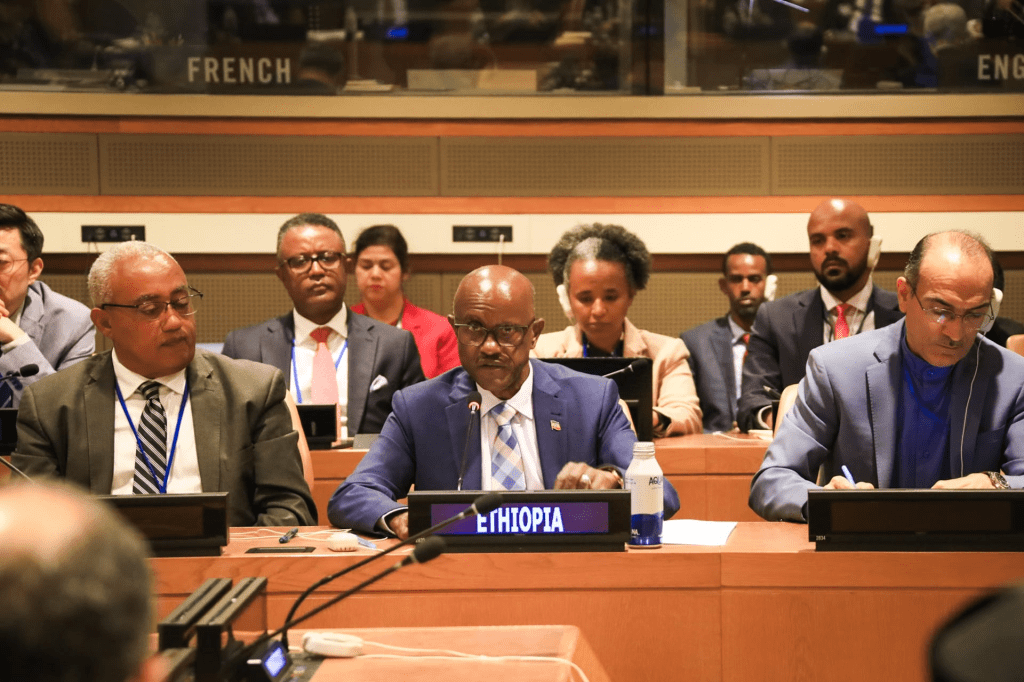
Ethiopia also participated in the meeting of BRICS Ministers of Foreign Affairs and External Relations, held in New York on Friday (September 26) on the sidelines of the UN General Assembly. Ambassador Hadera commended Brazil for its 2024 chairship and outlined Ethiopia’s priorities for 2025, including the implementation of BRICS trade, finance, and development initiatives. He also underlined the importance of BRICS countries supporting the United Nations in carrying out its mandate.
The BRICS Foreign Ministers’ Meeting, convened by India’s Foreign Minister, was preceded by a two-day Sherpa and sous-Sherpa session that prepared the Joint Media Statement. The statement addressed global issues such as trade, development finance, climate change, peace and security, and public health, as well as emerging areas including artificial intelligence. It reaffirmed support for a fair and inclusive multilateral trading system with the World Trade Organization at its core, and reiterated BRICS’ commitment to strengthening the UN-centered international system based on consultation, joint contribution, and shared benefits. The statement also emphasized the need for reforms in the global financial architecture to ensure more equitable representation of developing countries.
High-Level meeting on the Financing of the African Union Support and Stabilization Mission in Somalia
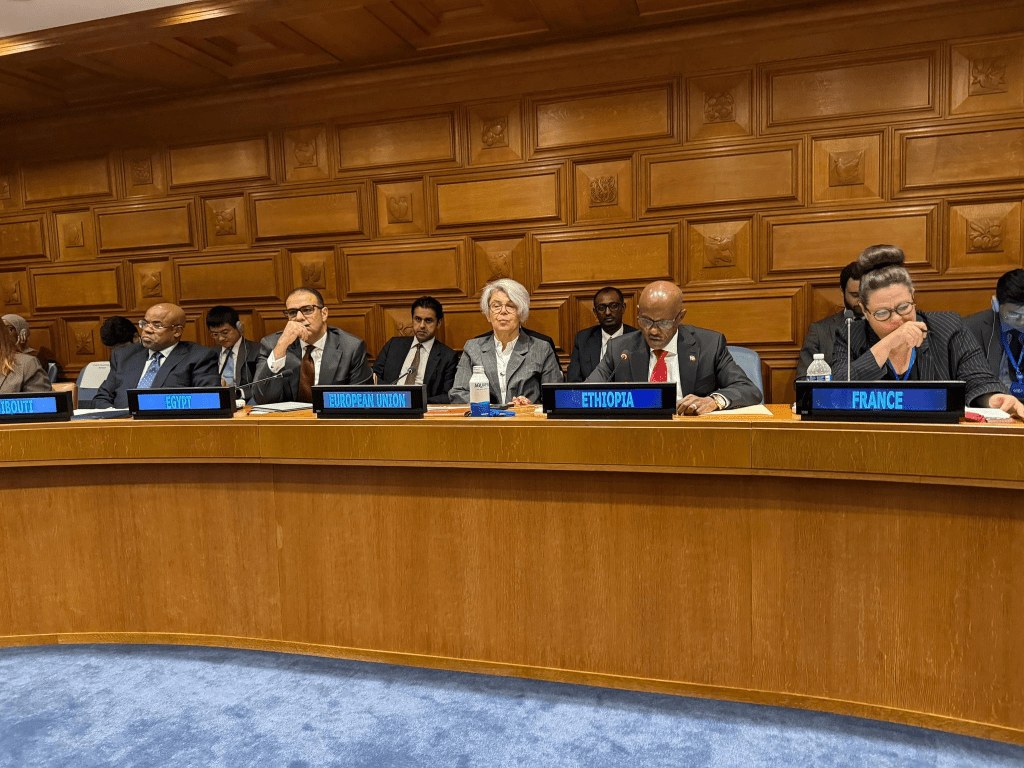
Ambassador Hadera also attended the meeting organized by the Government of Somalia together with the African Union and the European Union to deliberate on financing the African Union Stabilization and Support Mission to Somalia (AUSSOM).
President Hassen Sheik Mahmoud, presiding over the meeting, briefed participants on the progress to augment national security institutions and consolidate the gains made thus far. He also outlined the continued threat posed by Al-Shabaab, ISIS, and other global terrorist groups operating from Somalia. He called on the international community to keep its support.
Ambassador Hadera recounted the success of the African Union Mission in Somalia over the past thirteen years. He also underscored the profound importance of regional consensus against terrorism and the need to preserve it. He indicated Al-Shabab and its affiliates are acquiring the capability to wage terrorist attacks and threaten Somalia’s and regional as well as global peace and security. He emphasized the need to reinforce global action to make sure the terror group is denied political, financial, and military assistance from all sources. He also indicated that a lasting solution lies in strengthening the security institutions of Somalia and called for coordinated action.
UN Reform at the Centre of Discussions
The United Nations is faced with financial constraints due to delays in states paying their annual contributions in full and on time as dictated by Article 19 of the UN Charter. The organization has also been receiving criticisms for shortcomings in delivering on its mandate due to inefficiencies.
To address these shortcomings, the Secretary General of the United Nations came up with the UN80 Initiative. Through the initiative, the Secretary-General intends to create a more efficient, cost-effective, and responsive UN that is better equipped to deliver on its mandates on peace and security, development, and human rights. Further, the UN80 initiative intends to streamline UN offices, programs, and funds, and promote the utilization of digital technology, including Artificial Intelligence, to adjust its human resources and other needs.
The subject matter is featured in the speeches and pronouncements of world leaders and discussed at mandated and side events that take place within the high-level week. Subject to endorsement by member states in the intergovernmental process, the reform may entail the merger of mandates created by the Assembly, restructuring of offices, redeployment of staff, and relocation of UN offices and programs to low-cost duty stations.
In August 2025, the General Assembly adopted a Resolution that will serve as a framework for the intergovernmental resolution formalizing the proposed reforms. The resolution establishes an informal ad hoc working group of the General Assembly, open to all Member States and observers, to consider in its scope the proposals contained in the Secretary-General’s report.
Ethiopia’s track record of calling for organizational reform goes as far back as 1949, when it called for addressing the trend of creating multiple entities and subsidiary organs that risk overlapping with the mandates of the General Assembly. During the high-level week, Ethiopia addressed the reform of the UN in its policy statement, indicating the collective responsibility of member states to make the UN fit and capable of dealing with the challenges it is called upon to address. Furthermore, in his bilateral discussions with the USG Guy Rider, Chief Policy Advisor of the UNSG for reform, Ambassador Hadera reaffirmed Ethiopia’s commitment to extend all the necessary support, giving primacy to the effort to ensure the effectiveness of the organization.
Africa CDC Committee of Heads of State and Government: Meeting on Health Sovereignty
The Committee of Heads of State and Government of the Africa Centre for Control and Prevention of Diseases (Africa CDC) held its meeting with Joao Lorenco, President of Angola, presiding over the meeting.
The meeting was held under the theme “Guaranteeing the Health Sovereignty in Africa: Political Leadership for the Sustainable Finance of Health, Local Production and Preparation for pandemics.” Briefings and discussions focused on the financing needs for Africa’s health sector, proprietary actions by African countries towards the implementation of the Lusaka Agenda, pandemics preparedness, the progress on implementation of AU Assembly decision on production of health products in Africa and the common mechanism for procurement and acquisition, and coordination of Africa’s voice on global health initiatives.
Ambassador Hadera, in his speech, emphasized the role of enhanced domestic resource mobilization for health financing and the need to boost local and regional manufacturing capacity of health and medical products. He shared Ethiopia’s good practice in the implementation of the Community-Based Health Insurance (CBHI) and the ‘One Budget, One Plan, One Report,’ that Ethiopia is implementing as part of the Luska Agenda.
The Fourth High-level Meeting on the Prevention and Control of Noncommunicable Diseases and the Promotion of Mental Health and Well-being
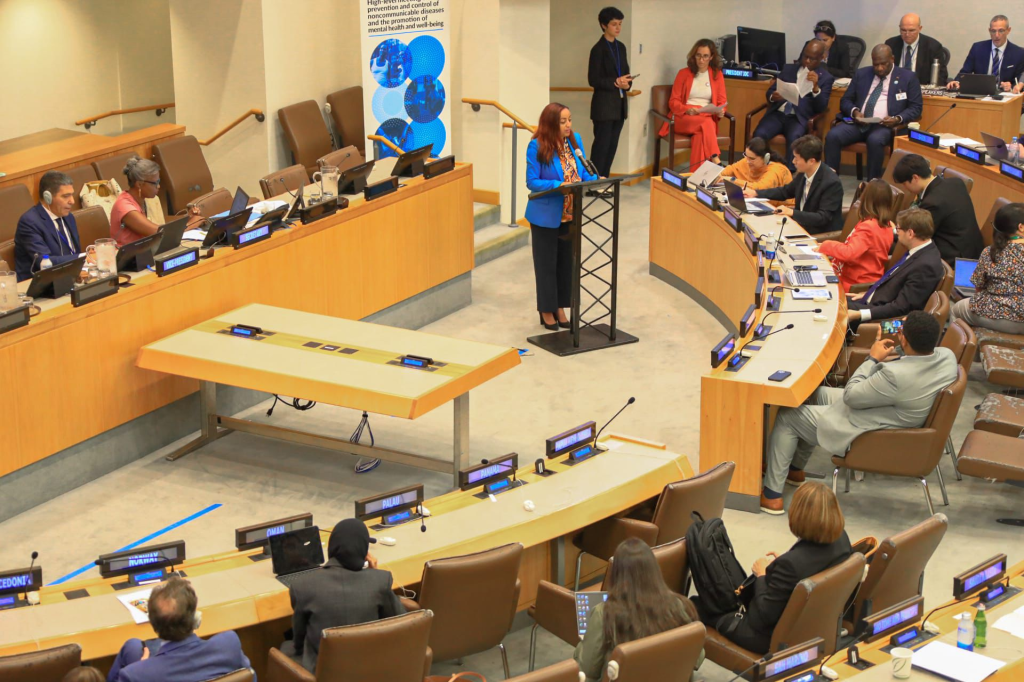
Mekdes Daba, Ethiopia’s Minister of Health, took part in the Fourth High-Level Meeting on Non-Communicable Diseases, which this year focused on mental health and well-being. The meeting mandated by UNGA Resolution 73/2 of the year 2018 reviewed the report of the Secretary General on the nexus between non-communicable diseases and mental health. High-level government officials, including ministers of health presented the national efforts to address NCDs and their mental health repercussions.
Mekdes highlighted the policy measures taken through the adoption of the National Strategic Action Plan to curb public health challenges caused by major non-communicable diseases. She indicated that, in line with Ethiopia’s health policy, priority is given to prevention efforts as it especially applies to NCDs. She indicated the role of indigenous community support mechanisms and urban development efforts that mainstream health care and mental well-being.
Sustainable Development Goal 3.4 targets a one-third reduction in premature mortality from NCDs by 2030. Despite the upward trajectory in the past years, progress has been slow due to decreased international cooperation and health financing. WHO reports confirm 7 of the 10 leading causes of death are linked to non-communicable diseases. The Secretary-General reports that in 2024 only, 43 million people have died from NCDs.
Minister Mekdes called for enhanced global solidarity to meet the demand for healthcare infrastructure and the provision of therapeutics, pharmaceuticals, and training and retention of medical professionals. The high-level meeting concluded with the adoption of a political declaration on the prevention and control of noncommunicable diseases and the promotion of mental health and well-being.
Bilateral Meetings Held by the Delegation
Ethiopia’s high-level delegation held twenty bilateral meetings with ministers and other high-level representatives of states and heads of international organizations.
President Taye conferred with the Crown Prince of Kuwait, Sheikh Sabah Al Khaled Al Hamad. The two sides discussed the historic and robust bilateral relations between the two countries. The Crown Prince recalled Ethiopia’s principled position and historic support for Kuwait during the latter’s invasion at the time of “Desert Storm.” President Taye highlighted the longstanding ties between the two countries on trade and development and called for enhanced partnership for the mutual benefit of the two countries, especially in infrastructure development and agriculture. The two sides agreed to conduct their regular political consultation and expound on the understanding reached between the principals.
President Taye also met with the President of the General Assembly, Annalena Baerbock. The two sides deliberated on the challenges the UN-centered multilateral system is facing. They also exchanged views on the ongoing UN 80 Initiative for the reform of the UN. President Taye invited the PGA to the African Union Heads of State and Government Summit.
The President also met with the Secretary General, Antonio Guterres, citing the progress in the fields of development, peace and security, climate action, the Secretary General recognized Ethiopia’s positive trajectory and prospects. He reassured the UN’s commitment to stay the course, accompanying Ethiopia in its path to prosperity. President Taye reiterated Ethiopia’s support for the Secretary General’s initiative for organizational reform to make the UN fit for the challenges it is mandated to address.
On his part, Ambassador Hadera met with Guy Rider, Under Secretary General and policy advisor at the UN. USG Rider briefed Ambassador Hadera on the status of the UN80 initiative and the support required from member states. Recalling the letter by Gedion Timothewos, Minister of Foreign Affairs of Ethiopia, addressed to the Secretary General on Ethiopia’s willingness to host UN organizations, Ambassador Hadera flagged Ethiopia’s readiness to be a reliable partner for the UN in its efforts to ensure efficiency and pursue cost-saving approaches.
Ambassador Hadera also met with Henry Gonzalez, Chief Investment Officer of the Green Climate Fund. Ambassador Hadera called for enhancing the encouraging partnership that already existed between Ethiopia and the GCF. Reinforcing Ethiopia’s application and proposal to host the African Regional Office of the Green Climate Fund in Addis Ababa, Ambassador Hadera reassured Ethiopia’s readiness to take measures for a positive consideration of Ethiopia’s proposal.
Ambassador Hadera also had bilateral discussions with the Foreign Ministers of Mozambique, Burundi, Sudan, South Sudan, Austria, the Democratic Republic of Congo, Angola, Belarus,, Azerbaijan, and the Philippines. Minister of State for Foreign the UAE The State Minister also met with the State Minister for Foreign Affairs of Portugal, the State Secretary of Germany, the Senior Bureau Official leading the Department of State’s Bureau of African Affairs of the United States, and the European Commissioner for Internal Affairs and Migration.
The bilateral meetings focused on strengthening mechanisms of bilateral cooperation in the fields of economic development, peace and security, and public diplomacy. Ambassador Hadera extended invitations to the upcoming forum to be hosted in Ethiopia, including the Tana Forum. An agreement is reached to commence the process to establish a Joint Ministerial Commission with Mozambique. With the Philippines, the two sides agreed to conduct political consultation and intensify cooperation in the field of skilled labor deployment and diaspora management. The meetings also covered candidacies for elections that the countries have for international posts.

Leave Your Comments Here